

That kitchen you’ve been imagining redesigning…
The bathroom that could really use a makeover…
Or the outdoor space you’ve been putting off for “someday”…
What if you already have the resources to finally bring those visions to life? More homeowners are discovering that they do.
By the end of 2026, homeowners are expected to spend over $522 billion on home improvements – and many are not draining their savings to get it done. Instead, they’re tapping into their home equity.
If you’ve owned your home for 10 or more years, you might be able to use your equity to fund some upgrades too. Let’s explore what you should know.
What Is Equity, and How Does It Help?
Equity is the difference between your home’s current value and what you owe on your mortgage.
According to Cotality, the average homeowner today has around $313,000 in equity. That’s more than enough to check off some projects on your list. Many homeowners are realizing that they can use this equity to improve their homes.
Recent research from Meridian Link shows that home improvements are currently the leading use of home equity.
Top Reasons for Using Home Equity:
- Funding home improvements (45%)
- Paying off other debts / debt consolidation (16%)
- Investing in other properties (16%)
It might make sense for you to do the same. But here’s an important point: just because you can use your equity doesn’t mean you should. Not all projects will give you the best return on investment.
Which Projects Are Worth It?
If you decide to use your equity, focus on upgrades that will add value to your home. Even if you’re not selling anytime soon, you want to ensure your home is set for success when you do.
A real estate agent is your best resource when weighing your options. They understand what’s popular with buyers in your area and what other homeowners are doing. As the National Association of Realtors (NAR) puts it:
“Helping sellers prioritize home improvements and maximize their return when selling is a key value real estate agents offer.”
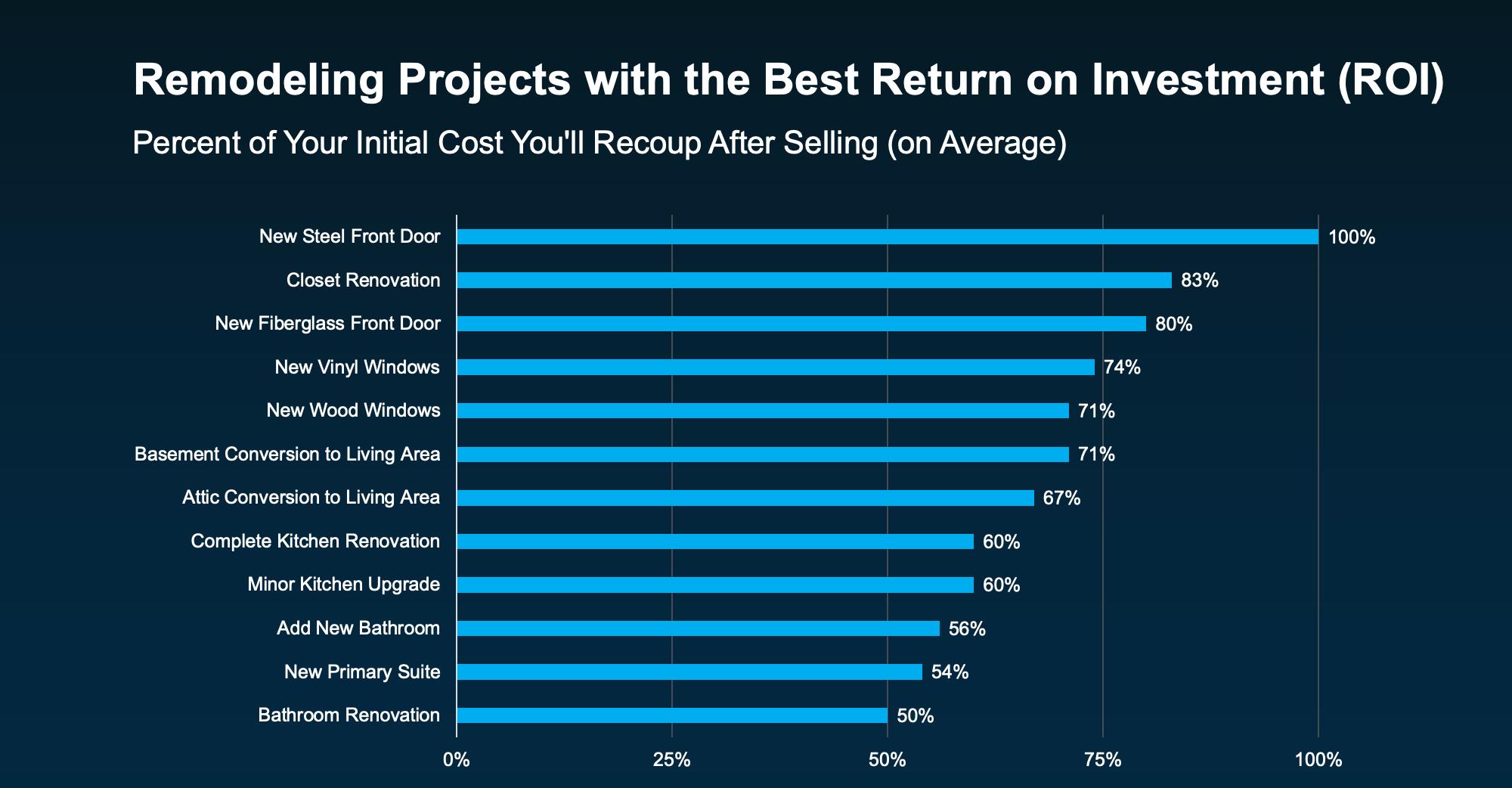
Here’s a quick look at the projects with the best potential to pay off, according to NAR (see the graph below). While it’s a great starting point, remember an agent’s expertise is invaluable.
[Graph showing a variety of home improvement projects]
As you can see, there’s a broad range of projects on the list. Yes, some are bigger investments, like kitchens or bathrooms, but others, like smaller updates, offer surprising returns.
For example, while a new front door is a nice touch, it may not be worth tapping into your equity for. But revamping your kitchen? That’s an ideal project where your equity could help lighten the financial burden.
What’s Next?
Regardless of whether your project is on this list, it’s essential to talk to an agent before you begin. They can help you determine if it’s worth the time, money, and effort before you hire contractors.
Remember, the goal isn’t to do everything—it’s about investing where it makes the most sense.
If you’re considering using your equity for a larger project, it’s wise to consult with a financial advisor. They can help you maintain a healthy loan-to-value (LTV) ratio after using your equity, ensuring you have all the information needed to make an informed decision.
The Bottom Line
Whether you’re preparing to sell soon or just giving your home some much-needed care, smart home improvements today can set you up for success down the road. The best part? Your equity could be the key to making it happen.
What’s one upgrade you’ve been contemplating, and wondering if it’s worth the investment?
Let’s chat about whether it’s the right move for your home.